Friday, May 31, 2013

Death of a Jackrabbit and comunity

The death of the jackrabbit represents the disintegration of the Native American reservation by their isolation from each other. The barren home of the Jackrabbit lacking water, other animal life, or movement is reminiscent to that of the reservation where poverty is the norm, a sense of community is minimal, and life on it stagnates into an endless cycle of abuse. The lack of community and sense of tradition ruins the lives of those on the reservation, for instead of reaching out to one another to cope with their painful history they isolate themselves to drink. The symbolism of the jackrabbit can be seen in all of the characters of the reservation by their loneliness but most notably through the actions of Thomas and Victor.

Thomas' outcast from the community stems from his embrace of his culture's history and tradition. The all knowing gift bestowed on him grants him access to stories of the past and visions of the future. However, the reservation fobs Thomas off as a crazy man for the pain the past brings and the fear they hold toward the future. In fact his stories incite rage and further distance the community away from him as seen in their treatment of him. Victor beats him to a bloody pulp, school mates cheer when he stops flying and breaks his arm, and queer looks are placed on any who associate with him. All Thomas tries to do is connect the community but is met with resistance. He explains: “We are all given one thing by which our lives are measured...Mine are the stories which can change or not change the world” (72). Thomas is trying to destroy this side of the reservation and rebirth the tradition that kept his culture strong rather than weak in isolation. Thomas' isolation from the community is similar to that of the lonely jackrabbit.

Victor, on the other hand, is one of many ripping apart the reservation by distancing themselves from the community and each other. Victor's part in Thomas' isolation is evident to him, as he admits to himself that he “knew that he couldn’t really be friends with Thomas, even after all that had happened” (74). Yet time and again Victor questions the reservation's sense of community and tribal ties. Victor's own father runs off, not wishing to be found and his corpse ends up rotting in a trailer for a week before it is found. Victor's father ran away from his family and community, possibly in an attempt to escape the emotional pain of the reservation but in alienating himself he dies alone. However, even the death of his father and the vision Thomas had that told them to stick together did not phase him. The disconnection between these former friends opens into isolation on a larger scale in the community. Victor is the jackrabbit committing suicide, by his refusal to reconnect with Thomas.

Friday, May 24, 2013

Howl: Crying out against 1950's American

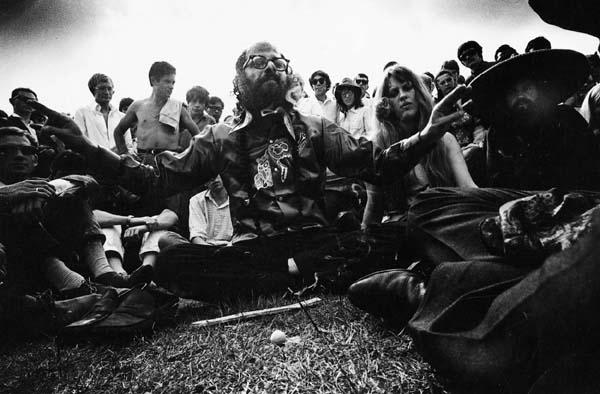
Allen Ginsberg's Howl marks a protest of conformist thought and consumerism pervading 1950's America. Ginsberg paints a picture of the insecurities, mental instability, and social suicide of those ostracized from this America in their attempt to express themselves without restrictions. 

Part I: Ginsberg creates an honest depiction of the Beat generation and their fight against the social norm. Ignoring the moral restrictions placed on 1950's America, the Beat generation freely expresses themselves in a stream of consciousness. Tweaking with the influence of jazz on the ease and beat of poetry, barriers of form are tossed out the window. Topics of what is morally correct is also questioned and the group commits social suicide for publication of “crazy and obscene thoughts”. In this depiction, Ginsberg delves into the dark side of his generation with their constant exposure to drugs, sex, violence, and mental instability. Ostracized from society for being different, this group attempts to find answers and express themselves spiritually and intellectually for a heavy price, as the group risks falling into oblivion, their work unread or ignored. 

                                                                     Allen Ginsberg

Part II: The reference to Moloch is Ginsberg's take on consumerism and the power of capitalism in America. The greed of capitalism sacrifices to Moloch the lives of men, women, and children through war, poverty, and the daily grind. Moloch is the killer of individual thought and oppressor of the people. The conformist trend of the 1950's is in effect creating a bubbly inaccuracy of life. The acceptance of this fake reality, according to Ginsberg, is the death of artistic expression and intellectual thought. The madness of the likes of Carl Solomon is the dissatisfaction and refusal to accept this cut out of reality. 


                                                         Ginsberg pointing to Moloch...

 Part III: The effect of Moloch's influence on society is reiterated in Ginsberg's ode to Carl Solomon, his friend from his time in a mental institution. Solomon's time in the institution or metaphorically Moloch's America, has stopped intellectual thought and effectively killed his soul and spirit. However, Ginsberg means to help Solomon by breaking this system. In the last three stanzas, Ginsberg predicts a free America that breaks down the barriers of conformist thought.

                                                         Ginsberg and Solomon


Friday, May 17, 2013

The Piano Lesson


In August Wilson’s The Piano Lesson, Berniece is the widow mourning the loss of her husband and father who were both brutally murdered after they were accused of theft. Boy Charles was burned to death for his part in saving the piano marking the family history while Crawford was shot following his part in stealing wood. This leaves Berniece emotionally detached and financially in trouble. Avery goes as far to blame her mourning for her indifference to marriage, accusing her of not being able to move on from the past. However, if we glance at her history and interactions with her daughter, Maertha, we can link her indifference to another factor. Berniece’s quest for independence prevents her from entering into another marriage for emotional and financial security.

Avery’s claim that Berniece’s indifference to his marriage proposal is in any way linked to Crawley’s death is invalid, for he ignores her desire to be an independent woman. When Avery suggests she cannot find happiness without a man’s love and affection she quickly retorts, “You can just walk out of here without me- without a woman- and still be a man” revealing the hypocrisy of his argument (67). Berniece goes on to say that Maertha’s love is enough to keep her going. Recalling the anguish her own mother had following her father’s death, no doubt hardens Berniece and makes her a stronger woman. Whereas her own mother withered away, Berniece remains resolute and cares for her daughter despite her inability to cope with death. Avery is hoping to look after and take care of Berniece but she is capable of attending to herself.

In fact by studying the relationship between Berniece and her daughter, we can see that financial independence is forefront in her mind. Berniece’s goal for Maertha is to make something of herself and become a teacher. The fear that Maertha’s gender will impede her future angers Berniece. The remark that if Maertha was a boy, Berniece would not be going through this stress points to the discrimination women face in life (90). Whereas Boy Willie, Doaker, and the rest of the family struggle to make a living for themselves in a prejudice society, Berniece and Maertha are struck not only by prejudice against their race but gender as well. Sutter’s ghost may hold sway over Berniece but Avery and the men in her life attempt to impede her just the same. By denying her the same rights they themselves are fighting for pushes Berniece to secure independence not only for herself but for her daughter.

Berniece’s stubbornness and anger may stem from the loss of her husband and father but it is exaggerated by the men in her life who fail to understand her need for independence. Her anger is sparked by their attempt to feminize her rather than accept her desire to be more than a wife. This is shown by her determination to manage her own affairs and see to the success of  Maertha’s future.