Allen Ginsberg's Howl
marks a protest of conformist thought and consumerism pervading
1950's America. Ginsberg paints a picture of the insecurities, mental
instability, and social suicide of those ostracized from this America in their attempt to express themselves without restrictions.
Part I: Ginsberg creates an honest
depiction of the Beat generation and their fight against the social
norm. Ignoring the moral restrictions placed on 1950's America, the
Beat generation freely expresses themselves in a stream of
consciousness. Tweaking with the influence of jazz on the ease and
beat of poetry, barriers of form are tossed out the window. Topics of
what is morally correct is also questioned and the group commits
social suicide for publication of “crazy and obscene thoughts”.
In this depiction, Ginsberg delves into the dark side of his
generation with their constant exposure to drugs, sex, violence, and
mental instability. Ostracized from society for being different, this
group attempts to find answers and express themselves spiritually and
intellectually for a heavy price, as the group risks falling into
oblivion, their work unread or ignored.
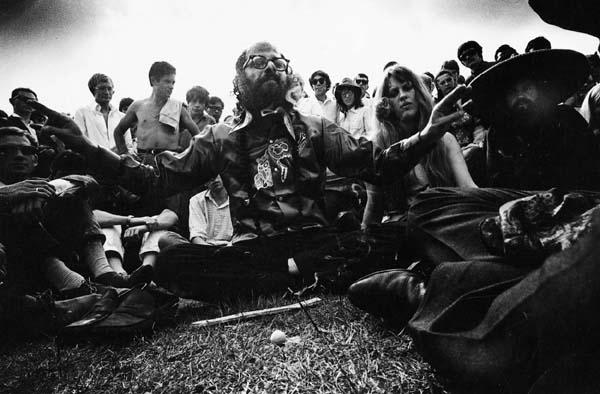
Allen Ginsberg
Part II: The reference to Moloch is
Ginsberg's take on consumerism and the power of capitalism in
America. The greed of capitalism sacrifices to Moloch the lives of
men, women, and children through war, poverty, and the daily grind.
Moloch is the killer of individual thought and oppressor of the
people. The conformist trend of the 1950's is in effect creating a
bubbly inaccuracy of life. The acceptance of this fake reality,
according to Ginsberg, is the death of artistic expression and
intellectual thought. The madness of the likes of Carl Solomon is the
dissatisfaction and refusal to accept this cut out of reality.
Part III: The effect of Moloch's
influence on society is reiterated in Ginsberg's ode to Carl Solomon,
his friend from his time in a mental institution. Solomon's time in
the institution or metaphorically Moloch's America, has stopped
intellectual thought and effectively killed his soul and spirit.
However, Ginsberg means to help Solomon by breaking this system. In
the last three stanzas, Ginsberg predicts a free America that breaks
down the barriers of conformist thought.

Ginsberg and Solomon

That is true that Allen Ginsberg, and his generation were fighting against the social norm. In Part I of the poem Ginsberg describes how this generation thought about themselves as outcasts of society. In this way they took it upon themselves to associate themselves with the other outcasts of society. I also agree that Ginsberg was referencing machinist America when he referred to Moloch. Moloch is everything that is bad about America. The Beat generation was trying to get as far away from this society as possible, which was another reason why they would rather be around the outcasts of society.
ReplyDeleteYour description of Part III was eloquently stated and provided an excellent description of the destruction of his soul and spirit. Although open to interpretation, I do believe tha you are correct in your thesis that members of the beat generation wanted to express themselves without restrictions, restrictions that American society, described as Moloch, enforced vhemently. It is Ginsberg's dark manner that defines his generation so perfectly and their outlook on American societal culture.
ReplyDelete